An Introduction to Data Center Development
How a plot of land becomes one of the strangest buildings on Earth
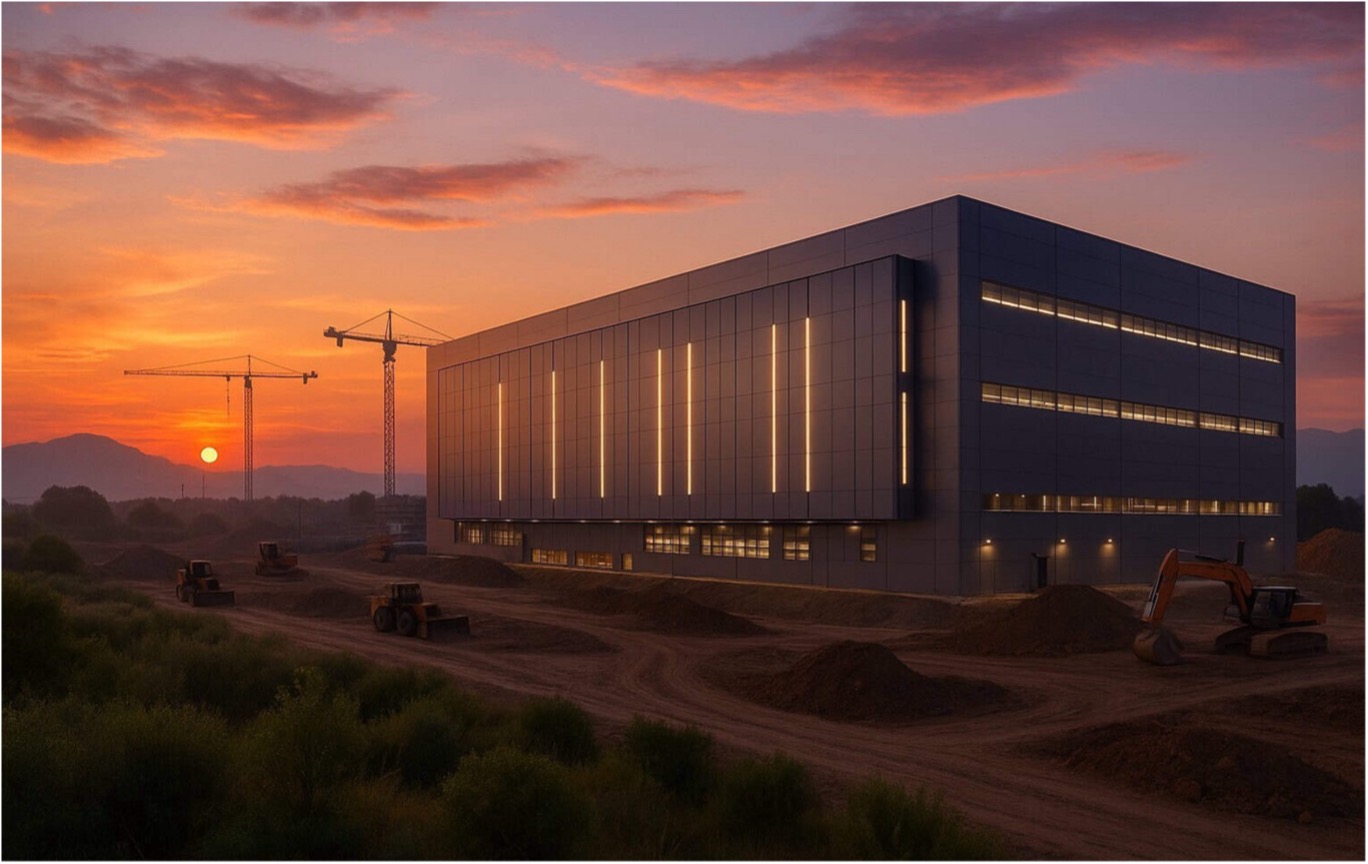
Every word in this sentence is a sequence of electrical impulses traveling between switches in a server rack, through a fiber optic cable, into a screen, into your eyes. The server lives in a building. The building draws power from a substation that was built specifically for it. The substation draws power from a grid that, in 2026, is straining to keep up. Most of the buildings doing this work are anonymous, gray, and located somewhere you have no reason to drive to.
These buildings are called data centers, and there are about 11,000 of them in the world. The largest consume more electricity than the cities they sit next to. By 2030, the world is expected to have built another 100 gigawatts of them – doubling the installed base in four years, at a cumulative cost that exceeds the inflation-adjusted budget of the Interstate Highway System, the Apollo Program, and the Manhattan Project combined. None of this is being built by the government.
This piece is about how those buildings get built. Not the GPUs inside them, not the cooling loops, not the rack topology. The bones: the land, the power, the permits, the four to six years it takes to turn a piece of farmland into a building that runs a meaningful piece of the internet.
Let’s do this.
What the building actually is
Mechanically: a data center converts electricity into computation, then carries away the heat that conversion produces. Two numbers describe it.
Megawatts. How much electricity it consumes. A small enterprise data center pulls 1 to 5 MW. A retail colocation site – the kind that rents space to many tenants – runs 5 to 30 MW. A modern wholesale or hyperscale campus is built at 100 MW and up. Many new facilities are now designed for 15 to 50 kilowatts per rack, compared with 5 to 8 kW just five years ago. The largest projects in planning today are gigawatt-scale, which is to say: drawing as much power as a small city. To make a server farm. Sit with that for a moment.
PUE (Power Usage Effectiveness). The ratio of total electricity in to electricity that actually reaches the servers. A perfect facility would score 1.0. A modern, well-designed building scores between 1.1 and 1.3. The other 10 to 30% goes mostly to cooling. Which is why operators end up caring about climate, water, and air handling almost as much as electricity itself — and why the Nordic countries have suddenly become extremely popular for reasons that have nothing to do with the food.
That’s the building. Now let’s build one.
Step One: Find some land
You’re going to need land. Not just any land. A 100 MW campus typically needs 20 to 40 acres. A gigawatt site wants 200 to 500. The land needs to be flat-ish, geotechnically sound, not in a floodplain, not adjacent to a wetland, and zoned for industrial use – or amenable to becoming so.
Already, you have a problem. Available, suitable land exists. Suitable land near power is the actual constraint, and we’ll get to that quickly.
For now, congratulations: you have optioned a parcel. Now you need permits.
Step Two: Permits, and the people who hate you
Securing zoning and entitlement approvals takes 6 to 24 months in most jurisdictions. In the easy ones, you walk in with a site plan, the planning officer says “huh, another one of these,” and you’re approved in 90 days. In the hard ones, you discover that someone has formed a Facebook group called Concerned Citizens for [Your County], that they have a lawyer, and that the lawyer has filed three motions against the project before the first public hearing has even occurred.
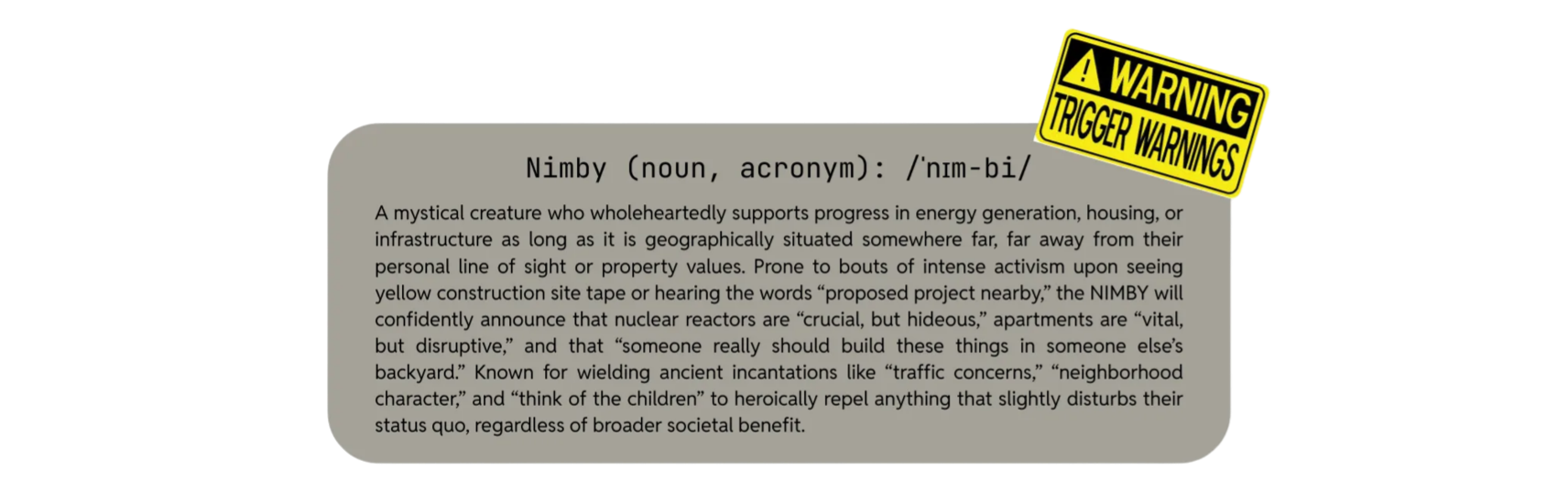
NIMBY-driven opposition is not a small problem for the industry. Data Center Watch reported $64 billion of projects blocked across 28 U.S. states in roughly a 12-month window between May 2024 and March 2025. Europe has its own version, with the additional flourish that the municipality itself sometimes joins the opposition. Amsterdam imposed a moratorium. Dublin imposed a moratorium. Several German Länder are flirting with the idea. The answer to “is this site approvable?” is no longer obvious, and the answer to “is this site approvable fast?” is almost always no.
Step Three: Power. Always Power.
OK so here’s the thing.
In 2018, you could plan a data center against an 18-month grid interconnection timeline and be roughly right. In 2026, you plan against a five-year grid timeline, and you count yourself lucky if it holds. U.S. interconnection timelines now stretch from four to ten years. In Europe’s FLAP-D markets – Frankfurt, London, Amsterdam, Paris, Dublin – connection queues now average seven to ten years. The grid did not get worse. The grid is the same. What changed is that everyone, all at once, decided to build an enormous power-hungry building, and a transmission system designed in 1975 was simply not prepared for the volume of polite letters it received.
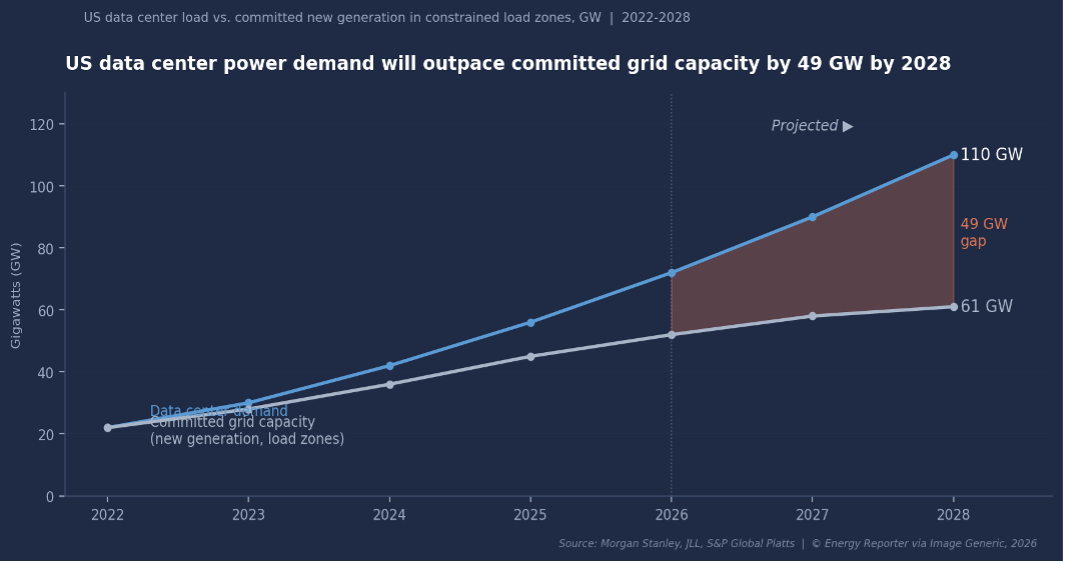
Your first move is a load study with the local utility – the transmission system operator (in Europe that’s TenneT, RTE, National Grid ESO and friends; in the U.S. it’s PJM, ERCOT, MISO, and friends). The utility studies whether the grid can supply your requested load and what upgrades – substations, transformers, transmission lines – would be required. The study itself routinely takes 12 to 24 months and can cost up to six figures.
If the answer is “yes, but we need to build a new substation and reconductor 15 km of transmission line, and the cost contribution is $80 million, and energization is 2031” – congratulations, that’s actually a good outcome. The bad outcomes look like “yes but only 40 of the 200 MW you requested,” or “we’ll get back to you,” or, in one well-known case, “please reapply in 2028.”
This is why power has become the first question on every site, and why a generation of data center developers who learned the trade in the 2010s are slowly losing their minds.
There is, of course, a workaround. Build your own power. Behind-the-meter generation – gas turbines, fuel cells, eventually small modular reactors, sometimes solar plus storage – bypasses the utility queue entirely. Roughly a third of new planned U.S. capacity is now designed to operate independently of the grid in some form. Texas and parts of the Midwest have leaned into this aggressively. The trade-off is capital intensity, regulatory complexity, and the awkward fact that your hyperscaler tenant has carbon-free energy commitments and a gas turbine in the parking lot is, well, conspicuous.
Step Four: Design
You have land. You have permits. You have, eventually, power. Now you design the building.
Data center design is the only kind of building design where the architect works for the engineers. The mechanical and electrical systems lead. The building wraps them. The most consequential decision in the design process is usually about transformer placement, not lobby finishes – and if you find yourself in a meeting where the architects are arguing over the lobby finishes for more than ten minutes, you are in the wrong meeting.
Design takes 9 to 18 months, with significant overlap into the next phase, which is —
Step Five: Procurement
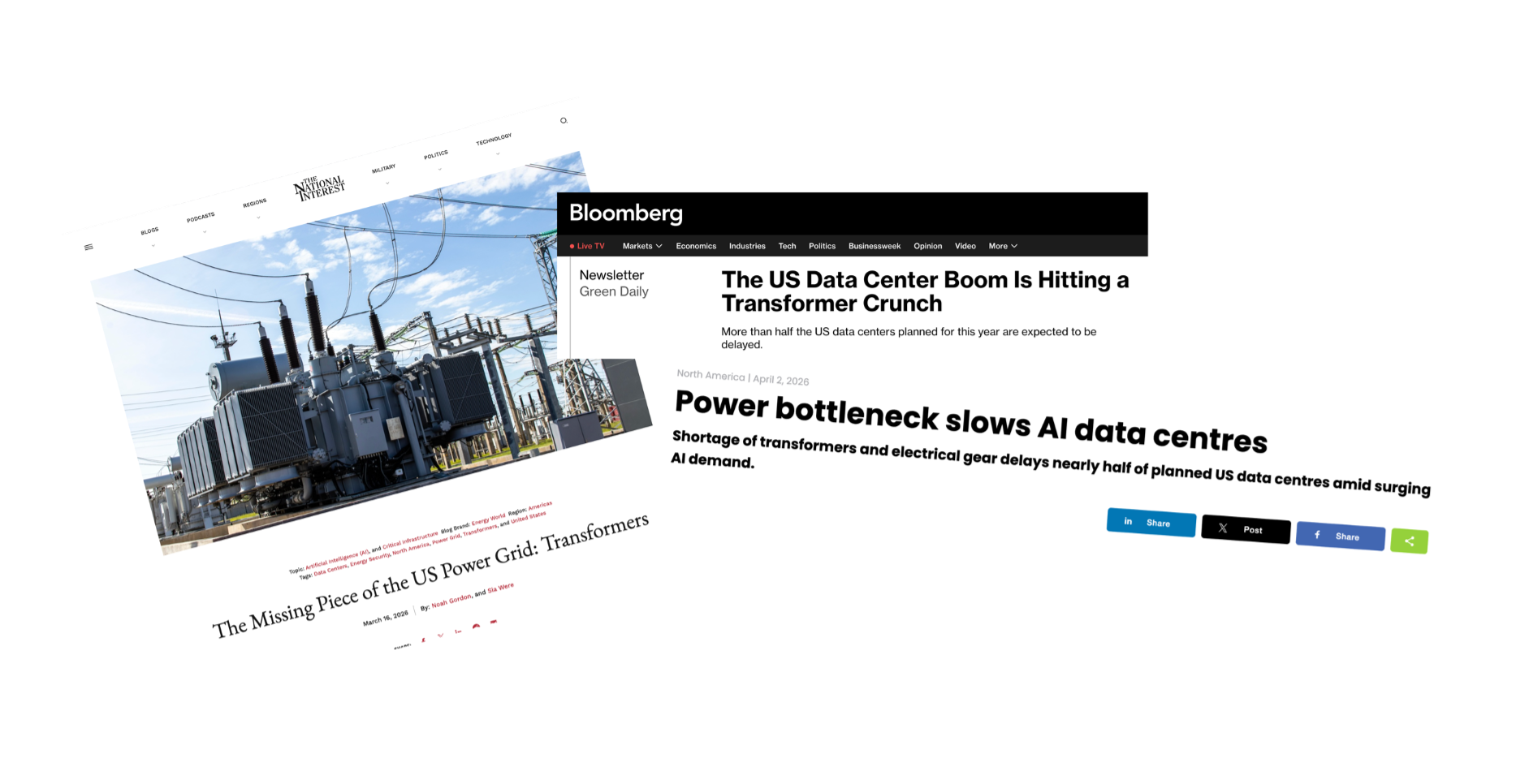
By 2022, the lead time for a high-power transformer was 24 to 30 months. That was the planning assumption every developer in the industry was working with.
Then everyone tried to order transformers at the same time.
By 2025, delivery times had stretched to as long as five years. Generators, switchgear, and chillers carry lead times of 12 to 18 months, with high-voltage equipment running far longer. Sophisticated developers now place equipment orders during design development, not after, because waiting until construction begins guarantees the equipment shows up about a year after you needed it. There are projects in Northern Virginia and Silicon Valley that are physically built – buildings up, fiber lit, fence installed – and cannot operate because they are waiting for a transformer.
Read that sentence again. The buildings are finished. They are dark. They are dark because of a stack of laminated steel sheets sitting on a barge somewhere off the coast of Korea.
Step Six: Construction
Construction takes 18 to 30 months. Site preparation, foundation, structure, envelope, mechanical and electrical install, fit-out. The physical building goes up. Toward the end, the cooling and power systems are installed and the IT infrastructure is integrated. Then there’s commissioning, which is 3 to 6 months of engineers deliberately breaking systems to verify the redundancy designs work – and discovering, with some frequency, what the design team got wrong. Then the building can begin operating.
A good campus, end to end, takes three to six years. The current trend is toward the longer end of that range, for reasons described above and also because the buildings are getting bigger and the queues are getting longer. Yes, modular construction helps. No, modular construction does not solve any of the actual binding constraints, despite what the marketing decks say.
So who’s actually involved in all this?
A single project at scale involves dozens of distinct counterparties. They group, roughly:
- Land and approvals: the municipality, planning authority, environmental regulator, neighbors, the local political establishment (which may be supportive, indifferent, or actively hostile).
- Power and infrastructure: the transmission system operator, the distribution utility, the water utility, the fiber carriers, increasingly the on-site generation provider. The most important of these is the utility. When a utility says they can get you power but doesn’t provide hard details or deadlines, it’s often code for “we have no plan and no timeline.” This kills fully permitted projects.
- The build: the general contractor, the major subcontractors (electrical and mechanical eat most of the budget), the architect, the MEP engineer, the commissioning agent, the equipment suppliers — who in 2026 often have more leverage than the developer because their product is in shorter supply than the developer’s capital.
- Capital and customer: the lenders, the equity investors, and the tenants — usually hyperscale cloud or AI companies. The tenant relationship is the one that determines whether the entire project has a buyer at the end of it. A pre-let agreement signed before construction is the difference between a financeable deal and a shelved one.
The developer is the party that talks to all four groups.
What’s actually hard about this
Three things, in 2026.
Power is the binding constraint, and almost everyone is still calibrated to a world where it wasn’t. A 2015-era developer evaluated sites on land basis and entitlement risk, with power as a secondary factor. A 2026-era developer asks “can this site be powered by the time we need it” before any other question – and a lot of the people who learned the trade in the previous regime are operating on instincts that no longer apply.
The decisions are all connected. A change in the regulatory pathway changes the timeline. The timeline changes the financial model. The financial model changes the capital structure. Equipment lead times change the construction schedule. None of these are independent. The teams that do this work well are the ones that hold the whole system in mind at once. The teams that struggle are the ones that hand each decision off in isolation, with the implicit assumption that someone else is tracking the implications. Often nobody is.
Information moves faster than planning models. Regulations change mid-project. Equipment lead times stretch. Grid queues lengthen. Capital markets shift. The challenge is rarely that the underlying analysis was wrong on the day it was done. The challenge is that the world changes faster than the analysis can be re-run, and the gap between what was true when we committed and what is true now widens silently until something breaks.
None of these are problems any single technique solves. Some of what makes development hard is structural and will stay that way. Political shifts, supply shocks, demand cycles – they keep happening. The honest version of this is that data center development in 2026 is one of the most demanding kinds of project execution in modern infrastructure, and the people who do it well are doing genuinely hard work that is mostly invisible to everyone else.
Why any of this matters
Most of the buildings being planned today will be built by people you’ve never heard of, in places you’ll never visit, against constraints that did not exist a few years ago. The bottleneck is not capital, attention, or demand – there’s plenty of all three. The bottleneck is the practical, daily question of whether the people doing the work can move fast enough through a system that has gotten dramatically more complex than it was the last time anyone wrote down how it should work.
If you’ve made it this far, congratulations: you now know more about data center development than approximately 99.7% of the population. You also have a faintly uncomfortable awareness that the next time you ask a chatbot a question, somewhere a transformer is buzzing, a chiller is cycling, a planning commissioner is being yelled at by a man with strong feelings about traffic, and a development director in Frankfurt is wondering whether his TenneT contact will reply this week.
Image credits: Hero image: AI-generated illustration. Megaproject comparison and grid wait time charts: original, sourced from the references above. Step Five collage: Bloomberg, The US Data Center Boom Is Hitting a Transformer Crunch · Financial Times, Power bottleneck slows AI data centres · industry analyst commentary on transformer supply.